IN DEPTH
The Worlds We Play In and the People Who Build Them
By Samuel Arden
“So you want to make games?”
A candid look at gaming, burnout, accessibility and the human cost of turning a childhood passion into one of the most coveted careers of the modern age.
For many players, games begin as refuge, skill, imagination, and escape. For those who go on to make them, that early devotion can become both gift and burden: a source of creative purpose, technical mastery, burnout, economic pressure, and a complicated search for balance inside one of the most emotionally demanding creative industries of the modern age.
Before games become an industry, they are often a room. A bedroom in childhood, a family computer, an old console under a television, a handheld screen carried somewhere private. For some people, gaming begins as competition or curiosity; for others, it becomes a form of refuge before they have the language to explain what refuge means. A child who feels anxious, isolated, overwhelmed, bored, under-stimulated, socially uncertain or simply more at ease in invented worlds may discover in games a rare kind of order. The rules are knowable. Failure can be repeated until it becomes skill. The world responds. There is a door, a map, a task, a story, a way through.
That early relationship with games is not trivial. Technology can become entangled with childhood mental health in ways that are both protective and risky. Games can offer relief, mastery, friendship, imagination and competence; they can also become overused when ordinary life feels too difficult, when sleep is poor, when anxiety is high, when social worlds feel unsafe, or when the nervous system learns to seek regulation almost entirely through a screen. The distinction is rarely simple. A game can be both sanctuary and avoidance, both training ground and hiding place, both genuine joy and the beginning of a pattern that later needs care. Balance is not a decorative wellness word here. It is the condition that allows gaming to remain nourishing rather than consuming.
Aaron, a game designer and developer with more than eight years of experience working on an independent project, understands that double nature intimately. His name has been changed for privacy, but his route into games carries the familiar shape of a life drawn early toward art, music, nature, story and constructed worlds. Games did not arrive for him as a career strategy. They arrived first as attachment.
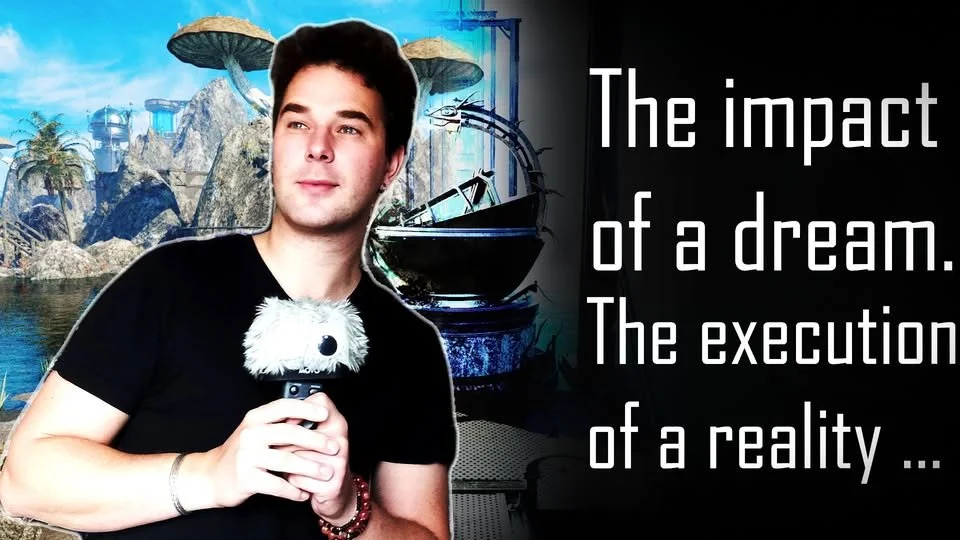
“I think it came from loving all these different creative things before I ever thought about it as a job,” he says. “There was art, nature, music, story writing, that feeling of wanting to make something you could step inside. Games seemed to bring all of that together for me. I felt connected to them from a young age, and once you have that connection it becomes hard to separate the game from the world, or the world from the part of you that wants to build one.”
His father, he recalls, was hesitant about the path and did not fully understand it. That hesitation still surrounds creative digital work, especially when it comes from older ideas of security. A career in games can look from the outside like play extended beyond its proper age, when in practice it demands an unusual convergence of technical intelligence, visual judgement, emotional stamina, collaboration, commercial awareness and persistent self-teaching. It is not only imagination. It is labour disguised, for the public, by the polish of the finished thing.
Aaron’s account matters because it does not reduce games to either harm or glamour. He speaks about the medium with seriousness, but also with the caution of someone who has felt its cost. The same devotion that drew him into game development eventually made the boundaries harder to maintain. Playing games had once been pleasure; making them altered the moral weather around that pleasure.
“When you go from playing games to making them, the relationship changes more than I expected,” he says. “I didn’t really have the same time to play any more, and when I did play I would feel guilty, like I should be working instead. That was strange, because gaming had always been something I loved, but suddenly even relaxing with a game could feel like I was doing the wrong thing. It became consuming, especially with the 3D modelling side of it, because there was always more I could do and always something I could improve.”
There is a particular sadness in that shift. The thing that once restored him began to accuse him. The screen no longer separated work from leisure; it became the shared surface on which both competed. Going out became harder. The gym dropped away. Ordinary routines that keep a person in contact with their body, friends and non-work life became easier to postpone because the work itself felt meaningful. This is one of the more treacherous aspects of passion-led labour: it does not always feel like overwork while it is happening. Sometimes it feels like dedication, momentum, even privilege, until the rest of life has grown thin around it.
Gaming is often discussed publicly through a limited set of anxieties: screen time, addiction, violence, distraction, children who will not come off their consoles. These concerns are not meaningless, and there are cases where gaming behaviour becomes seriously harmful. The World Health Organization includes gaming disorder in the ICD-11, describing a pattern of impaired control and increasing priority given to gaming despite negative consequences; in England, the NHS National Centre for Gaming Disorders supports people whose gaming has begun to damage ordinary functioning. Yet most gaming does not fall into that category, and moral panic can obscure the more interesting question: why do games become so psychologically powerful in the first place?
Part of the answer lies in what they offer. Games train attention, patience, spatial reasoning, pattern recognition, strategic thinking, reaction, memory and problem-solving, although the evidence varies by game type, duration and individual context. They can give anxious people a bounded challenge, lonely people a community, neurodivergent people a system with legible rules, and young people a place to practise failure without the humiliation that often accompanies it offline. They can also become a refuge that quietly narrows life if used as the only reliable method of emotional regulation. The question is less whether games are good or bad than what place they occupy in the wider ecology of a person’s life.
For developers, that ecology becomes even more complicated. Making games requires many of the skills gaming can develop, but under professional pressure those skills are pushed to a different intensity. A developer may spend a day thinking like an architect, engineer, artist, editor, performer and psychologist, moving between code, mechanics, visual composition, pacing, player behaviour and technical compromise. The work asks for imagination, but it also asks for endurance. It asks for aesthetic sensitivity, but also for the capacity to tolerate revision, rejection and failure without losing the thread of the whole.
Aaron still describes that creative dimension with warmth. “There is an artistic therapy to it,” he says. “When you are building something, especially when it is your own world or your own idea, there is this sense of exploring your creativity and feeling some control over your life. You are making choices, shaping an environment, solving problems, and when something finally works there is real joy in that. When the project was released, the feeling was blissful, because you can look at it and think, after everything, this exists now.”
That sentence, “this exists now”, sits at the heart of why people keep making games despite the cost. Development turns private imagination into a public object. It gives form to work that may have lived for years as sketches, tests, broken builds, unfinished systems, uncertain funding and private doubt. Release can feel like vindication, but it can also expose the developer to public judgement at the moment they are most depleted. Players meet the polished surface. Developers remember the compromises underneath.
The psychological strain is rarely caused by a single pressure. It accumulates through time demand, financial uncertainty, technical difficulty, perfectionism, visibility, comparison and the unstable economics of creative work. Aaron says the time pressure was one of the most mentally demanding parts of the job, along with the guilt that gathered around leisure. He had assumed love would protect him from burnout, which is a common mistake among people who turn childhood passion into adult work.
“I was naive about the workload because I thought, if I love this enough, maybe it won’t affect me in the same way,” he says. “But loving something does not mean you can do it endlessly without consequences. There was pressure to complete the project on time, pressure to keep improving it, pressure to make it good enough, and because I cared about it so much I did not always notice when the balance had gone.”
This is where the language of balance has to be rescued from cliché. Balance is not the fantasy of equal hours distributed neatly across work, exercise, relationships, sleep and pleasure. It is a more practical and less glamorous discipline: knowing when the work has begun to colonise the parts of life that make the work sustainable. For game developers, that may mean protecting time away from the same screen on which they create, rebuilding a relationship with games as play rather than obligation, noticing when guilt attaches itself to rest, and treating the body as more than a support system for the mind.
The games industry has long had a fraught relationship with this discipline. Crunch culture, even where publicly softened or officially disavowed, continues to shape the imagination of the field. The old mythology suggested that intense deadlines were a badge of seriousness, a necessary ordeal before release, the heroic final push through which a team proved its belief in the project. In practice, crunch can mean weeks or months of extended hours, disrupted sleep, strained relationships, poor nutrition, reduced movement, emotional volatility and the gradual normalisation of personal depletion. It is rarely experienced as heroism by those living inside it.
Aaron’s own comments on work culture were cautious rather than theatrical. He did not claim that every studio is the same, and that matters because the industry is not one room. It is independent developers, small teams, contractors, AAA studios, publishers, platform holders, freelancers, artists, programmers, writers, QA testers, producers and technical specialists working under wildly different conditions. Even so, he returned several times to instability, speed and the pressure to remain employable.
“In some places people may feel comfortable talking about mental health, and in others they will not,” he says. “It depends on the environment, the people above you, and whether you believe being honest will actually be safe. There is also not enough understanding around neurodiversity and diagnosis, especially when there is such a high chance of neurodivergent people being drawn to this kind of work. A lot of people may be trying to understand themselves while also trying to keep up in a very fast-paced industry.”
That observation opens onto one of the industry’s least developed conversations. Game development often attracts minds comfortable with systems, repetition, visual logic, deep focus, world-building, pattern recognition and nonlinear problem-solving. These strengths may overlap with neurodivergence, though they do not belong only to neurodivergent people. The workplace, however, is not always designed to support the same minds it benefits from. Sensory overload, vague communication, sudden priority shifts, chaotic scheduling, intense deadlines, social ambiguity and the expectation of constant availability can make the work punishing for people whose skills are otherwise exceptionally suited to the craft.
In the UK, this intersects with a strained diagnostic landscape. NHS England’s ADHD Taskforce has acknowledged that waiting times for ADHD services have become unacceptably long, with assessment delays leaving many people in limbo. For workers who suspect they may be ADHD, autistic or otherwise neurodivergent, the absence of formal diagnosis can make workplace support harder to access, even when the need is obvious. A humane industry would not require people to arrive with perfect paperwork before it begins making reasonable adjustments. It would recognise that self-knowledge often precedes clinical confirmation, particularly in systems where confirmation can take years.
Aaron’s proposed support is striking because it is practical rather than ornamental. “I think one-to-one support roles would make a real difference,” he says. “Not just someone you speak to when everything has already gone wrong, but someone who checks in weekly, understands the pressures of the work, and can help people notice when they are losing balance. Fast-paced environments are not ideal for everyone, and sometimes people need support before they are at the point of burnout.”
There is a useful severity in that idea. It moves mental health away from slogans and toward infrastructure. Many companies have learned the vocabulary of wellbeing without changing the systems that damage wellbeing: awareness posts, optional talks, employee assistance links, posters, vague encouragement to reach out. These gestures are not worthless, but they can become evasive when they leave the distressed worker responsible for naming, disclosing and managing their own decline inside the same hierarchy that may be contributing to it. Weekly check-ins, manager training, neurodiversity awareness, protected decompression after milestones, clear overtime boundaries and confidential advocacy are less glamorous than public campaigns, but they are closer to what support actually requires.
The World Health Organization’s guidance on mental health at work emphasises organisational interventions, manager training, worker training and support for people with mental health conditions. The UK Health and Safety Executive treats work-related stress as a risk employers should assess and manage, not as a private failure of resilience. These frameworks matter because they challenge the old creative-industry habit of treating distress as the individual cost of ambition. A developer can practise better boundaries and still be harmed by impossible timelines. A worker can sleep, exercise and seek help while still being worn down by instability. Personal responsibility exists, but it cannot substitute for structural responsibility.
Money is one of the structures most likely to be politely omitted from wellbeing conversations. Aaron is clear about its force. Independent development may offer creative control, but unless a project is funded by a publisher or supported through some other stable arrangement, the developer may need side jobs, family support or living arrangements that make the work possible. He mentions working as a carer, living at home, and trying to fit development around the practical requirements of survival. These details matter because they puncture the glamour of the dream job. Passion may begin the project, but it cannot pay for the years in which the project is not yet earning.
“The best option is being funded properly, because otherwise you are trying to build something while also doing whatever you need to do to pay the bills,” he says. “If you are working another job, or living at home to make ends meet, or carrying other commitments, that changes how much time and energy you can give to development. People sometimes see the finished game and not the financial juggling behind it.”
This financial instability is not confined to independent developers. Across the wider industry, layoffs and studio closures have become part of the emotional weather. The 2025 GDC State of the Game Industry survey reported that 11 percent of respondents had been laid off in the previous year, with a much larger share affected by layoffs in some way. The figures have become familiar enough that they risk losing their force. For developers, however, redundancy is not an abstract market correction. It is income, identity, routine, colleagues, visas in some cases, housing in others, and the sudden collapse of a future that had been planned around a project.
Aaron’s description of layoffs and cancellations is concise but heavy. “It is devastating,” he says. “It creates an atmosphere of instability, because you know talented people can put years into something and still lose their job, or watch a project disappear. That kind of uncertainty affects people psychologically. It makes you feel you always have to prove yourself, even when you are already working hard.”
The demand to prove oneself is one of the quieter injuries of unstable industries. It makes rest feel dangerous. It turns visibility into self-defence. It encourages people to accept poor conditions because someone else is waiting for the same opportunity. It is especially harsh for smaller developers, who must compete not only with one another but with major studios, established franchises, algorithmic storefronts and an oversaturated release calendar. Aaron points to the difficulty of making a living in a market where so many games are released and discoverability can determine survival. He wants more routes for smaller games to be published, listed and seen, including better opportunities on platforms such as Steam and more space in the market for newer, smaller projects.
“The market is oversaturated, and that makes it harder to earn a living from the work,” he says. “There are so many games coming out that even a good project can struggle to be noticed. I think there needs to be more opportunity for smaller developers, more ways to get published, more ways to be listed and seen, because the growth of gaming as an industry should mean more work and more options, not fewer jobs and more layoffs.”
His advice to aspiring developers is correspondingly unsentimental. He warns them to protect their intellectual property and to choose collaborators carefully, especially people whose strengths cover their own weaknesses. This is not only business advice. It is psychological advice in another form. Many developers are makers first; they may be less comfortable with interviews, public presentation, marketing, negotiation or self-promotion. In an industry where visibility is increasingly part of survival, lack of confidence can become a material barrier.
“If you are going into it, maintain the rights to your intellectual property,” Aaron says. “And if you partner up, find someone who can do what you cannot do. If you struggle with interviews or the public side of things, work with someone who is stronger there. You need the foundation to be right, because the idea and the passion are not enough on their own.”
The foundation matters in questions of gender too. The gaming industry remains male-dominated in many areas, though the problem is not reducible to numbers. It is about who is imagined as technically authoritative, who is mentored, who is heard without repetition, who is promoted, who has to manage hostility politely, and who is expected to keep proving they belong. Aaron’s perspective here is necessarily limited, but he has noticed unevenness in the industry’s attention to women.
“I have seen the conversation around women in games spike and then dip a bit,” he says. “I cannot say I have seen enough campaigns or enough visible work promoting women in the industry. It feels like something that gets attention at certain moments, but the support has to be more consistent if it is going to make a real difference.”
That consistency is the difficult part. Recruitment campaigns may bring people in, but they do not guarantee that workplaces are safe, equitable or genuinely hospitable. Women need more than invitations; they need pay equity, promotion pathways, credible reporting systems, parental support, mentorship and daily studio cultures in which competence is not treated as provisional. Diversity work becomes thin when it celebrates arrival but neglects retention, especially in an industry where burnout and instability already press hard on everyone.
Accessibility reveals a similar pattern of progress and lag. Aaron has seen accessibility become more visible in game design, particularly around colour-blind modes, easier-to-read text for sight-impaired players, and emerging consideration of VR for disabled people and wheelchair users. This is one of the areas where the industry’s ingenuity is evident. A colour-blind mode recognises that important information should not depend on one visual cue. Adjustable text acknowledges that legibility is not decoration. Remappable controls refuse the old assumption that every player uses the same body in the same way. Seated VR modes, alternative locomotion systems and adapted hardware suggest that immersion does not have to be built around a narrow physical norm.
“Accessibility is definitely more considered now,” Aaron says. “You see more colour-blind options, more thought about easy-to-read text for people with sight impairment, and more discussion around VR for disabled people and wheelchair users. That is good progress, because games should be built for more people, but it still depends on whether accessibility is thought about early enough and whether the studio really treats it as part of design.”
That final condition is crucial. Accessibility added late is often partial, compromised or vulnerable to being cut. Accessibility built early tends to improve design for everyone because it forces clarity. Microsoft’s Xbox Accessibility Guidelines, for example, address text readability, contrast and other design decisions that affect whether players can actually use what a game provides. These are not marginal details. They are entry points. A game that cannot be read, navigated, heard, customised or physically controlled by many players has not merely overlooked a feature; it has narrowed its own world.
The industry’s stronger conversation about player accessibility also exposes a weakness in its employment culture. Disabled players are increasingly discussed as an audience worth designing for, but disabled and neurodivergent developers still face barriers in hiring, tools, offices, communication norms and schedules. There is an uncomfortable irony in a studio that can design accessible options for a game while failing to make its own workplace accessible to the people who might build them. Inclusive products do not automatically imply inclusive labour.
AI now presses on this landscape with its own complicated force. Aaron does not reject it outright, but he is wary of overuse. “AI is a tool,” he says. “It should not be over-used.” In a stable industry, that might sound like a moderate technical position. In the current games industry, it carries economic anxiety. Developers have watched layoffs spread while companies talk about efficiency and automation. Junior roles, craft pathways, authorship and creative identity all feel newly exposed. For a field already struggling with instability, AI can appear less like neutral assistance than another way to reduce the human presence in work that depends on human judgement.
Asked what he would change about the industry, Aaron returns not to prestige but to employment. “There need to be more work options, more jobs, and more opportunities that actually keep in line with the growth of the gaming industry,” he says. “If gaming is growing, employment should be growing with it. It should not be a situation where the industry expands but people are still being laid off or pushed out.”
That gap between market growth and worker security may become one of the defining tensions of contemporary gaming. Players see more games, larger worlds, faster releases, constant updates, subscription libraries, expansions, remakes, live-service models and technological spectacle. Developers may see the same expansion from the other side: more competition, more instability, more demand for visibility, more pressure to adapt, more uncertainty about whether the work they are doing will still be valued in five years.
Aaron’s answer to what the work is really like resists both cynicism and fantasy. “It is tough,” he says. “But it also comes down to how tough you make it for yourself, and whether you are doing it for the right reasons. You have to have a real passion for it. Do not glory hunt. Focus on the work, the world, the story, and the journey from the style to the marketing to the way the whole thing comes together. Ask what you are doing it for and who you are doing it for. It is a passion project industry, and it is not something to do on a whim.”
There is an unresolved tension in those words, and the article should not try to tidy it away. On one hand, Aaron is right: the work demands seriousness, patience and a love that can survive long stretches without applause. On the other hand, industries often benefit when workers internalise hardship as a test of purity. Passion is necessary in game development, but passion should not be used as a substitute for stable employment, humane scheduling, mental health support, accessible workplaces and fair pay. Loving the work may be what brings people in; it should not be the reason they are allowed to burn.
For players, much of this remains invisible. A game arrives as a surface: trailer, title screen, patch notes, reviews, arguments, streams, bugs, beauty, disappointment, delight. Behind that surface are people who have lived with the project far longer than the audience ever will. They are designers, artists, programmers, animators, writers, producers, QA testers, accessibility specialists, audio designers, community managers and many others whose names may pass too quickly in the credits. They have mortgages, diagnosis waits, caring responsibilities, injuries, grief, anxiety, ambitions and bodies that cannot be negotiated with indefinitely.
A mature games culture would still criticise games seriously. It would ask hard questions about labour conditions, monetisation, accessibility, representation, pricing, ethics and quality. It would also learn to distinguish between the corporation and the worker, between the strategic decision and the person asked to implement it, between a broken launch and the exhausted people who may have warned that the schedule was impossible. Public anger often travels toward “the developers” as a single faceless category, when development is usually a chain of constrained decisions made by people with very different degrees of power.
Aaron’s story does not ask for pity. It asks for accuracy. Games can be beautiful, technically sophisticated, socially meaningful and psychologically beneficial. They can also become consuming, both for players who rely on them too heavily and for developers who mistake love for immunity. The industry can cultivate extraordinary skills while failing to protect the people who possess them. It can design access for players while lagging on access for workers. It can grow commercially while narrowing the lives of the people trying to survive inside it.
The better future is not one in which games become less ambitious. It is one in which ambition is no longer measured by how much human strain can be absorbed before release. That would mean studios treating mental health support as infrastructure rather than image, building neurodiversity awareness into management rather than branding, designing accessibility from the first stages rather than the last, creating more stable routes for smaller developers, protecting workers from chronic overextension, and respecting the fact that creativity is not separable from the life that sustains it.
Behind every world on screen is another world of work, less visible and more fragile. The games industry has spent decades learning how to hold a player’s attention, guide their perception, reward their persistence and make digital spaces feel alive. Its harder task now is to apply some of that intelligence inward: to the developers whose minds, bodies and private histories are already inside the worlds they build.
Want to Step Into the World Yourself?
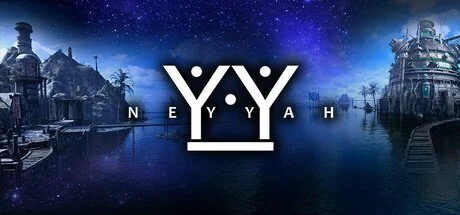
The conversation around game development can become abstract very quickly: years of work compressed into words such as burnout, design, pressure and release. Neyyah offers the more interesting alternative — the chance to see what all that labour eventually became.
Created by Aaron and developed through Defy Reality Entertainment, Neyyah is a first-person point-and-click adventure built around exploration, observation and puzzle-solving, set across a strange network of remote islands, ancient machinery and unfamiliar cultures. It is the kind of game that rewards curiosity rather than haste: looking properly, noticing what does not quite fit, keeping notes, and allowing the world to reveal itself at its own pace.
For Aaron, the project has also become a rather satisfying answer to the uncertainty that shadows so much independent development. Neyyah has now sold more than 10,000 copies, turning years of private work into something thousands of players have chosen to enter for themselves. That chapter is already opening onto another: Aaron has since been contracted by another games producer to begin work on his next title.
For readers considering game development themselves, there is something useful in being able to move directly from the interview to the work behind it. The pressures discussed throughout this article are real, but so is the finished world on the other side of them.
Explore Neyyah on Steam →
https://store.steampowered.com/app/1289720/Neyyah/